
[Whilst the city sleeps...]
Comet C2020/F3 & Noctilucent clouds, Leeds, July 2020. (Photo by Stuart Pickles)
Comet C2020/F3 & Noctilucent clouds, Leeds, July 2020. (Photo by Stuart Pickles)
The Informal meeting will start at 7.30pm and will be a "hybrid" with both a physical meeting at the Quakers Meeting House in Leeds, and online via Zoom. Attendance at the Quakers Meeting House will cost £2 for members and £3 for non-members. The Zoom option is now £2 which will be added to your annual subcription at the end of the year. (Please keep a note of any Zoom meeting you attend!). Any non-members who wish to attend on Zoom should please Contact Us.
Members wishing to give a small presentation/talk, or bring in any equipment for a 'show & tell', should contact the President (Steve Strickland) or Secretary (Kyle Mear). No item too small! Similarly any members with any questions or topics they would like to see covered, are encouraged to speak up, or post a message to the LAS email-group.

Our group is open to everyone with an interest in Astronomy, no matter whether you're a casual observer, armchair astronomer or dedicated astro-photographer. The night sky belongs to everybody and we welcome all comers, whatever age, experience or background!
Astronomy is arguably the oldest science & it is accessible by all. Our society was formed in 1859 and is the oldest surviving amateur Astronomy group in England. Currently we have about 50 members.
Newcomers are welcome to try us out before you decide to join - no obligation!
You will find all you need to know about our meetings, activities and observing sessions on this website. In addition to regular meetings the society still meets virtually via Zoom and our Groups.io 'chatline'.
Membership rates for 2025 have had a modest increase of £2 - the first increase in many years...
Current Sun Spots
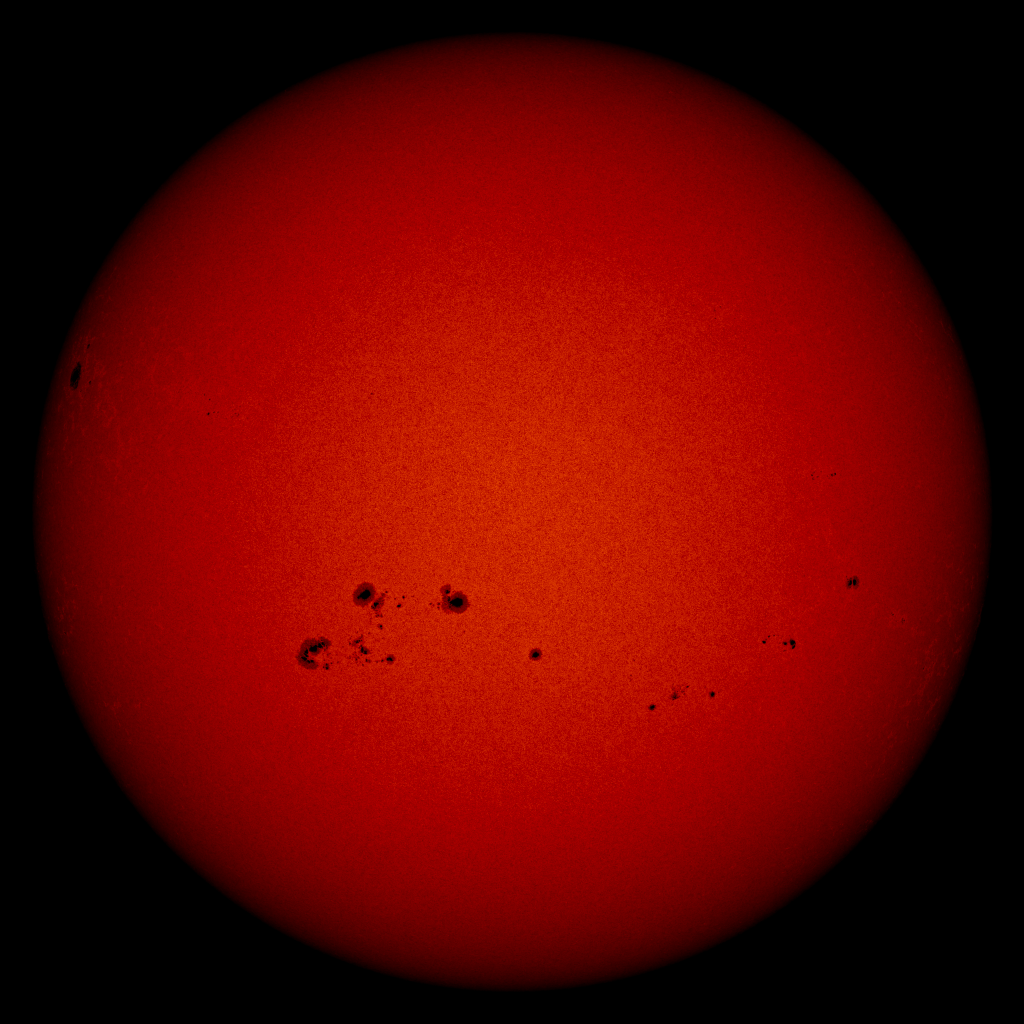
Click on the link to visit the most recent images from the Solar Dynamics Observatory, including different wavelength observations and Magnetogram images.
Stellarium

Web version of the popular Stellarium planetarium software. A very useful tool for learning the night sky & locating Deep Sky Objects. For the free and even better desktop version see: stellarium.org
Clear Outside

Detailed weather forecasts aimed at the astronomer.


